Operational intelligence for your business

You don’t need an AI strategy. You need someone to set it up.

The accounts and access configured properly, the tools wired into your systems, your team trained on them, and the missing pieces built.

Book the forty-five minutesNothing to prepare.
A document review queue showing five items processed automatically: four certificates and agreements that passed every check, one supplier invoice flagged because its line total disagrees with the purchase order, and one purchase order still being read.
Review queue12 OPEN
  • Certificate of insuranceNORTHSIDE MECHANICAL · GL + AUTO4 / 4 CHECKS
  • Supplier invoice #4471LINE TOTAL DISAGREES WITH PONEEDS A LOOK
  • Subcontractor agreementEXPIRY EXTRACTED · 2027-03-314 / 4 CHECKS
  • Purchase order 20881QUEUED 2 MIN AGOREADING
  • WSIB clearance letterVALID THROUGH 2026-11-304 / 4 CHECKS
ONE FLAGGED FOR A HUMAN. THE OTHER ELEVEN CLEARED THEMSELVES.
Claude Codeagentic codingCodexagentic codingClaude Coworkyour team working alongside AIMCPconnecting AI to your systemsSSO & RBACwho can see and do whatAudit trailsprovable access historyEncryption at restwhere your data sitsRetention controlswhat gets kept, and how longEvalsproving it still works next month

Five places owner-run businesses lose time

These are the patterns that repeat across trades, professional services, and small manufacturers. You will recognise at least two of them. Each one is a fixed, boring, solvable problem — not a transformation programme.

  • Quoting and proposals

    Someone rebuilds a quote from the last similar one, hunts for current pricing, retypes the scope, and reformats it. An hour or more per quote, several times a week, done by whoever is most expensive.

  • Documents read and re-typed

    Insurance certificates, supplier invoices, purchase orders, compliance paperwork, subcontractor documents. A person opens each one, finds four fields, and enters them somewhere else.

  • Follow-up that goes cold

    Quotes sent and never chased. Enquiries that arrived during a busy week. Nobody decided to drop them; there was simply no system holding the thread when things got loud.

  • The Monday report

    Someone exports from two systems, pastes into a spreadsheet, fixes the formatting, and sends the same summary they sent last week. Half a day a month, every month, forever.

  • Knowing things only one person knows

    Pricing logic, which supplier to use, how a particular job is normally scoped. It works until that person is on holiday, and it is a real risk when they retire.

  • None of this is a technology problem

    Every one of these already exists and already works — it just runs on a person’s time and attention. That is precisely what this technology is good at, and precisely what gets skipped in favour of something more exciting.

A note on honesty: there are no invented savings figures on this site. Any number printed here would be someone else’s business, not yours. The first week exists to produce your number instead.

Most businesses your size are not behind on this. They simply have no route in.

Two people using a chatbot on personal accounts, no policy, and a fair worry about whether it’s safe. That is a normal starting point, and it is fixable in days.

  1. Horizon 01

    Use the tools properly

    The right accounts on the right plans, access set up sensibly, a one-page policy your staff can actually follow, and training on the tasks that matter in your business — not a generic webinar. Cheapest, fastest, and a surprising amount of the early return lives here.

  2. Horizon 02

    Connect them to your systems

    Wiring those tools into accounting, job tracking, email and file storage, so they work from your information rather than behaving like a clever stranger with no context. Almost nobody takes this step on their own.

  3. Horizon 03

    Build what doesn't exist

    Where no off-the-shelf tool will do the job — document pipelines, scheduled agents that run unattended, evaluation layers, and the screens your team works in daily.

Where most clients start

The Weekly Owner Brief

One page in your inbox every Monday morning. What came in, what’s overdue, which jobs are slipping, and the three things that need you this week — read straight from the systems you already use, not typed up by anyone.

What it reads
Your accounting package, your job or project tracker, your inbox and your calendar. Read-only: it reports, and never sends, pays or changes anything.
What it tells you
Money owed and who to chase. Jobs running over hours or past their date. Quotes with no reply after a week. Three priorities, ranked by what they are worth.
How it arrives
Connected in the first week, with your first brief the following Monday. After that it runs every week, and I check it monthly so it doesn't drift when your systems change.

Why start here

It touches every system you have. By the time it’s running, I know how your business actually works and you’ve seen whether I can build — which is what any work after it should be decided on.

It is also the same system I run my own business on.

Book the forty-five minutesAlready know the process you want gone? Bring that instead.
A sample Monday brief for a fictional contracting company. Money: $41,200 owed across three invoices past thirty days, to chase, and $18,650 received last week. Jobs: one renovation with labour at 112 percent of estimate, one warehouse fit-out on hours and on date. Pipeline: two quotes worth $63,000 with no reply in nine days. Three priorities for the week follow.
Monday brief07:00

Money

  • Owed to you$41,200 · 3 INVOICES PAST 30 DAYSCHASE
  • Came in last week$18,650 · 6 PAYMENTSRECEIVED

Jobs

  • Kempenfelt Ave renovationLABOUR AT 112% OF ESTIMATEOVER
  • Sunnidale Rd warehouse fit-outON HOURS · ON DATEON TRACK

Pipeline

  • Two quotes, no reply in 9 days$63,000 COMBINEDFOLLOW UP

This week

  1. 01Call about invoice 1184 — $22,400, 47 days out
  2. 02Decide on the Kempenfelt overage before Thursday
  3. 03Follow up the two open quotes
SAMPLE · FICTIONAL COMPANY. NOBODY TYPED THIS UP.

Six things, built properly

A deliberately short list. Each one is a system that runs in your business, on your data, owned by you.

Document pipelines

Certificates, invoices, applications, contracts and compliance paperwork read automatically, checked against your rules, and returned as a structured summary someone can act on. Usually the shortest route to hours saved.

  • Certificates of insurance
  • Supplier invoices
  • Purchase orders
  • Subcontractor agreements
  • WSIB clearances
  • Submittals

Work that runs itself

Wakes up, does a defined job, and interrupts a person only when something genuinely needs judgement.

Quoting support

Your own history and pricing logic, captured so a quote starts at eighty percent complete instead of blank.

The connective tissue

The manual re-entry between your accounting package, your job tracker and your inbox. Unglamorous, and usually the fastest hours returned per dollar spent.

Answers from your own files

Guardrailed, so it declines to answer rather than inventing something.

The screen people actually use

The dashboard, the review queue, the internal tool — designed to the standard of software you would buy, because the best pipeline in the world is worth nothing if your team avoids it.

Evals

The layer that proves it still works next month, not just on the day it shipped.

What I will tell you not to do

Not every process should be automated. If something happens four times a year, the automation costs more than the hours it saves. The first conversation usually removes at least one item from the list — that is a good outcome, not a lost sale.

You own all of it

Code, prompts, accounts, infrastructure. Transferred to you, not licensed back to you. No platform lock-in, no per-seat licence, and any competent developer can pick it up.
Things you can look at

A mockup is a promise; the running system is the deliverable. Every capture is a live screen from work designed and built end to end — brand through deployment.

Six clients delivered end to end
Live links available on request

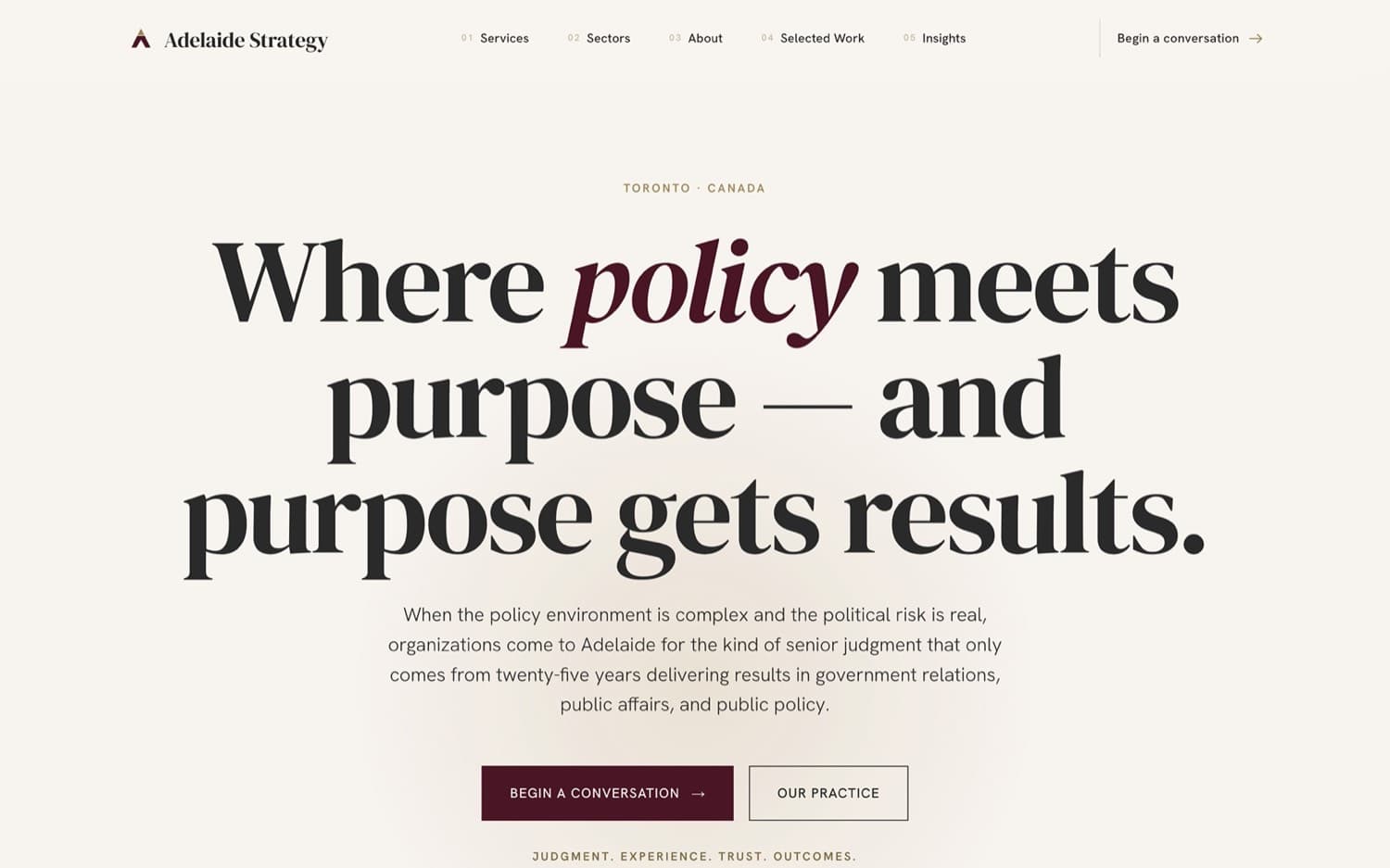
  • Adelaide Strategy homepage, an editorial layout with a large serif headline reading 'Where policy meets purpose'

    Adelaide Strategy

    Brand identity / art direction / UI

    A competitive audit found every rival firm using the same navy, the same typeface, the same card grid. The identity and seven-page editorial site break that pattern deliberately.

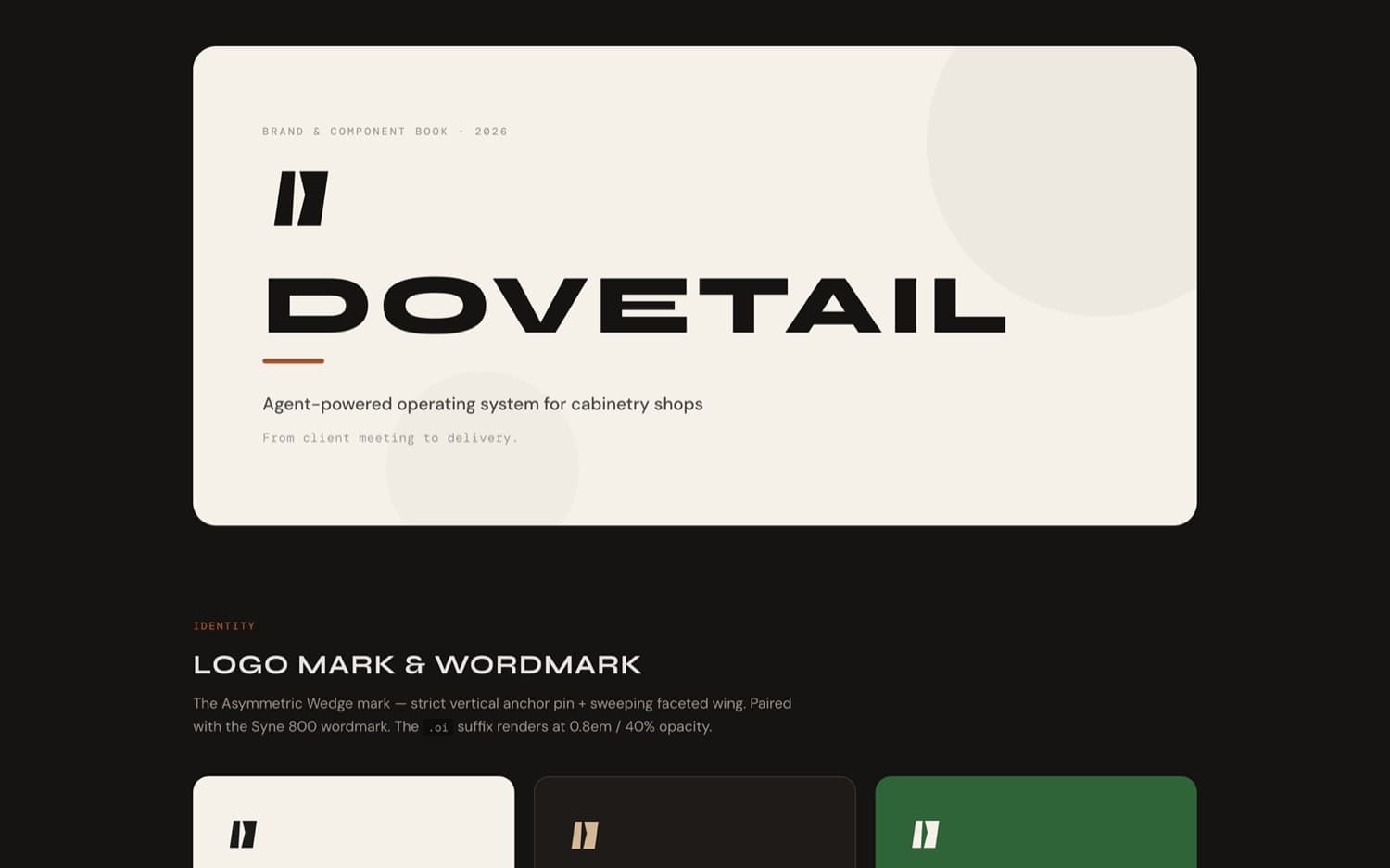
  • Dovetail brand book page showing the wordmark in white on a dark background alongside logo variants

    Dovetail

    Brand and component book

    Fourteen mark directions explored on the dovetail joint, resolved into a documented system: three colour environments, a typographic scale, and a live component book.

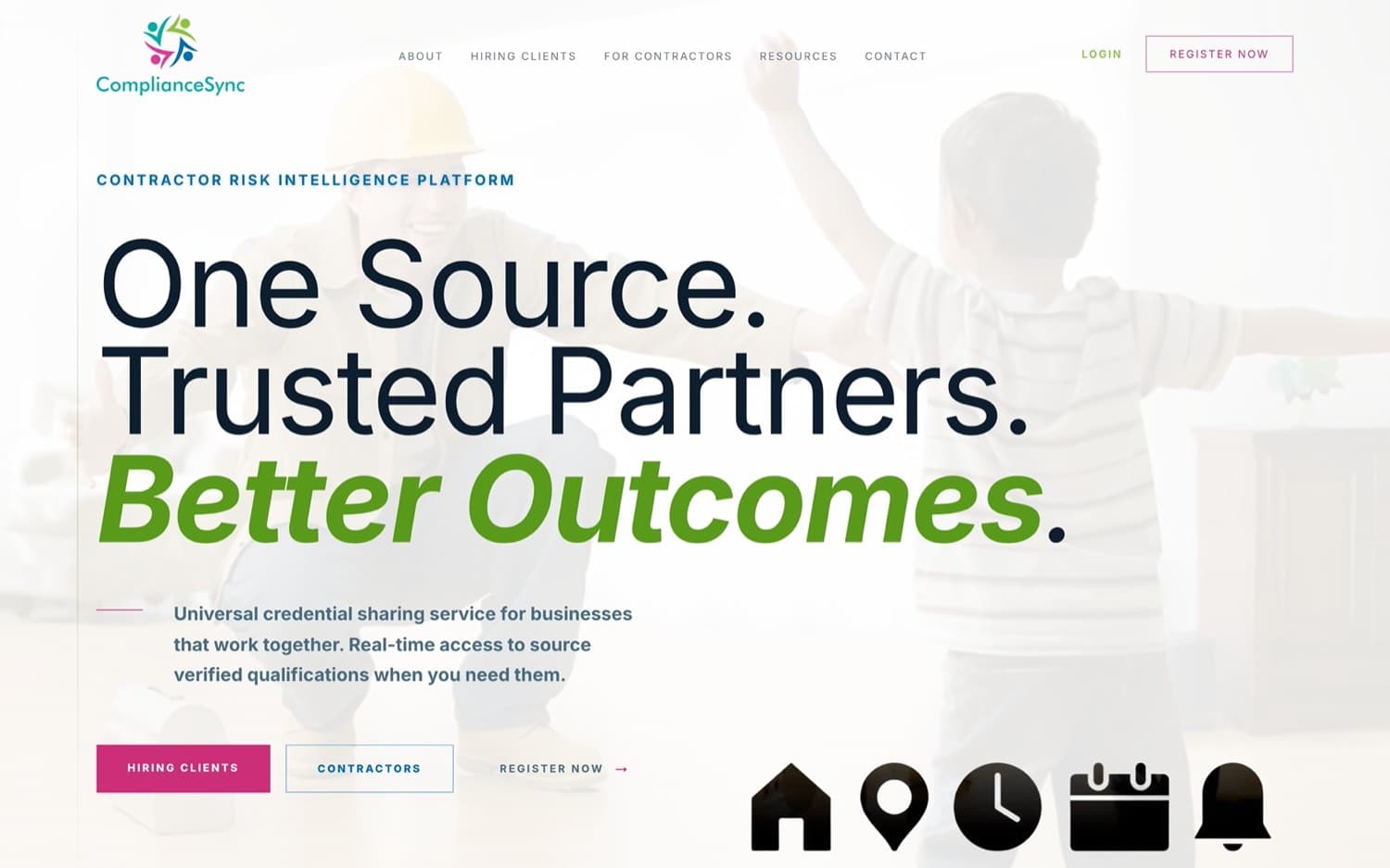
  • ComplianceSync platform homepage with the headline 'One Source. Trusted Partners. Better Outcomes.'

    ComplianceSync

    UX system / seven-page platform

    A contractor risk-intelligence platform organised around a colour-coded Connect, Verify and Approve model, then handed off cleanly to the client's own engineering team.

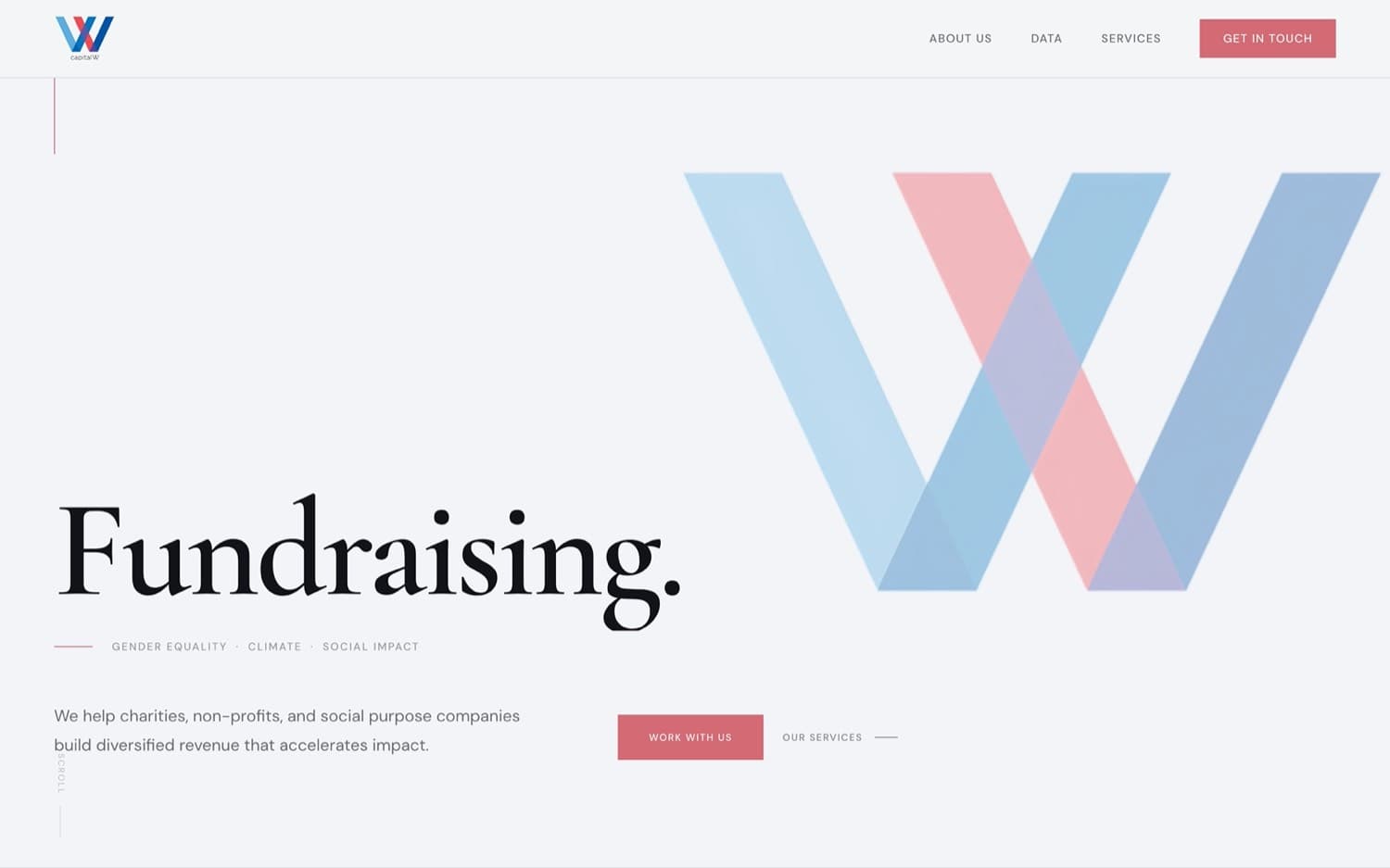
  • capitalW Consulting fundraising page showing a large layered W mark in blue and red

    capitalW Consulting

    Interface rebuild / motion

    A scroll-driven narrative with animated impact figures; their tiled wallpaper mark reframed into a single editorial brand element.

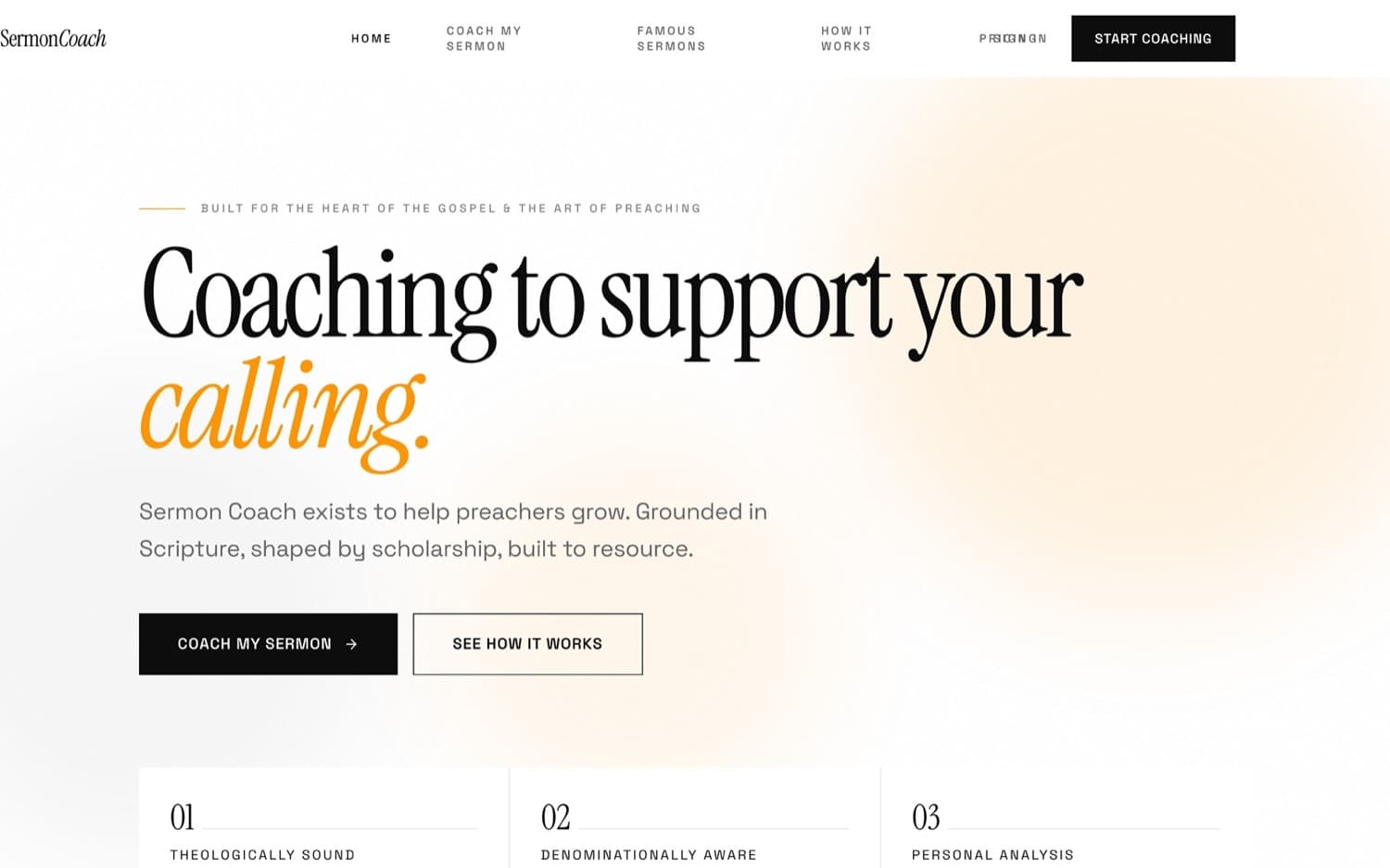
  • Sermon Coach landing page with the headline 'Coaching to support your calling'

    Sermon Coach

    AI product / UI and system

    An AI product where the pipeline and the interface were designed together — multi-stage analysis returned as something a non-technical person can read and act on.

  • Ultra Creative House homepage showing the word ULTRA in large white type on a dark background

    Ultra Creative House

    Own brand / identity and site

    My own studio identity and site — useful mainly as evidence that the standard I hold client work to is the one I hold my own work to.

Eight questions to ask anyone selling you AI

Including me. These separate a real engagement from an expensive subscription. My answers are underneath each one.

01 / 08

Who owns what gets built?

You do — the code, the configuration, the data, and the accounts it runs on. It is transferred to you, not licensed back to you. Get this in writing from anyone.

The honest caveat

I’m one person, and you should factor that in. It’s why the work is deliberately structured to survive without me: your accounts, your ownership, written documentation, and no proprietary platform in the middle. A larger firm gives you more people; it does not usually give you better answers to the eight questions above, and it rarely gives you the person who built it on the phone when something breaks.

Three stages. You can stop after any of them

Structured so the decision to continue is made on something you can see working, rather than on a proposal.

  1. 01

    The Teardown

    One week · Fixed fee

    Forty-five minutes to see how your business runs. I build the Weekly Owner Brief — or a working version of whichever process is costing you more — and hand it over running.

    • A working system, on your data
    • One page on what the next three would be
    • Yours to keep either way
    • Fee credited if we continue
  2. 02

    The Build

    Two to four weeks · Fixed scope

    One system taken properly to production. Scope, price and delivery date agreed in writing before any work starts.

    • Deployed and running in your business
    • Documented so your team can maintain it
    • Training with whoever will use it
    • Two weeks of fixes after launch
  3. 03

    Fractional

    10–20 hrs/week · 3-month minimum

    Standing hours each week. I hold the roadmap and remain the person who understands how it all works.

    • A known number of hours, every week
    • Continuous improvement, not a project
    • Month to month after the first three
    • Most clients arrive here after a build

Why it’s built this way. Nobody should commit to a significant engagement with someone they haven’t watched build anything. The first week is deliberately small and deliberately real — not a discovery phase, not a workshop, and not a deck. Something that runs.

If that week doesn’t produce something obviously worth having, that is genuinely useful information, and far better established in week one than in month four.

What I need from you

About two hours in week one. Forty-five minutes to scope, a short session to see the working version, and someone available for questions in between.

Access to the relevant systems, and one person who knows how the process actually runs today — not how it’s supposed to run.

One process, one week

The most useful thing you can do next costs you forty-five minutes.

  1. 01

    Pick the process that annoys you most

    Not the most strategic one — the one that makes someone in your office sigh. That instinct is usually right, and it's a better starting point than an assessment.

  2. 02

    Forty-five minutes to walk me through it

    How it runs today, who touches it, where it goes wrong. Nothing to prepare on your side; the current mess is the useful input.

  3. 03

    I tell you honestly whether it's worth automating

    Sometimes the answer is no, and you get that for free. If it is worth doing, you'll know what the week produces before you commit to it.

Let’s book the
forty-five minutes.

Bring the process you’d most like to stop doing by hand. Nothing to prepare.

There is no pricing on this site on purpose. What a piece of work costs depends on what it turns out to be, and I’d rather quote something real than publish a number that would be wrong for your situation. Ask directly and you’ll get a straight answer in the first conversation.